
Fundamentals · 8 min read
Moving Head vs Wash vs Beam vs Spot
Wash lights spread soft, wide color; beams throw a tight, sharp shaft of light for aerial looks; spots sit in between and add gobos and focus; hybrids combine modes. Choosing the right fixture type for each job is what makes a rig look intentional rather than random.
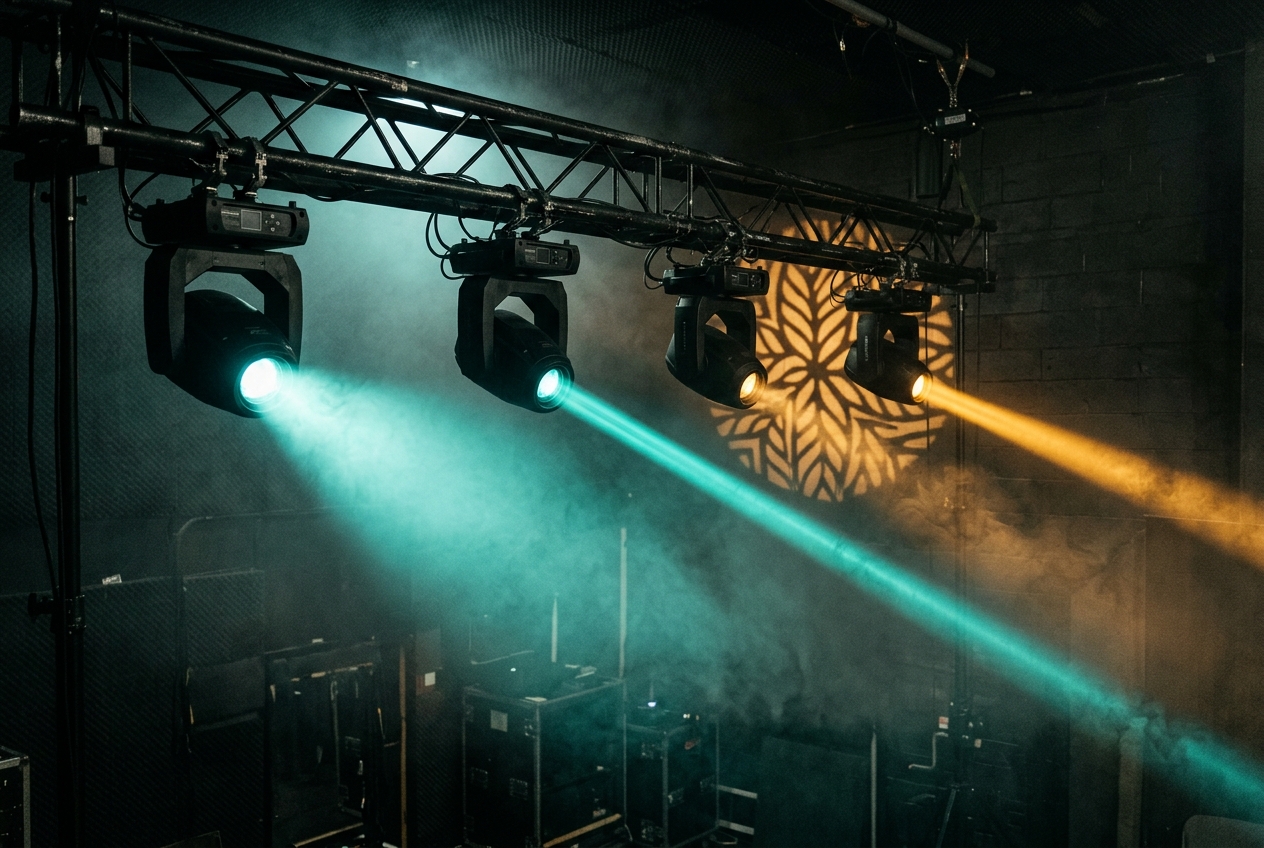
Why fixture choice matters
Rigs look amateurish when the wrong fixture is asked to do a job it can't — a wash can't cut a crisp mid-air beam, and a beam can't gently color a cyclorama. Matching type to task is most of the battle.
Wash
A wash produces a soft-edged, wide beam used to flood the stage or a backdrop with even color. Washes are your workhorse for general coverage and color states. Many have zoom to vary the spread, and the best have smooth, saturated color mixing. They rarely have sharp gobos because the point is smooth, blended light.
Beam
A beam fixture throws a narrow, intense, near-parallel shaft of light — think tight "pencil" beams cutting through haze. Beams are about aerial effects and impact, not stage coverage; their beam angle is often just 3–5°. They look spectacular in fog and are a staple of concert and club rigs.
Spot
A spot sits between wash and beam: a defined-edge beam that can project gobos (patterns), use a focus/iris, and often a prism and animation wheel. Spots are the versatile all-rounder for texture, mid-air patterns and highlighting performers.
Profile
A profile is a precise spot with framing shutters that let you cut the beam into clean shapes — essential in theatre for lighting a specific area (a doorway, a lectern, an actor) without spill onto the set.
Hybrids
A hybrid (sometimes "BeamSpotWash") switches between beam, spot and wash modes in one fixture — flexible and cost-effective, though usually a slight compromise on each individual mode compared to dedicated fixtures. Great when truck space or budget is tight.
Non-moving staples
- PAR / LED par: simple, punchy color washers, often on the floor or truss for saturated backlight.
- Batten / bar: a row of pixels for eye-candy, chases and pixel mapping.
- Blinder: raw white audience light for big hits and reveals.
- Strobe: intense flashes for impact and energy.
Building a balanced rig
A versatile small rig often mixes types: washes for color and coverage, a few spots for gobos and texture, beams for aerial punch, and pars or battens for eye-candy. Buying ten of one type rarely gives as much range as a considered mix.
See how these preview in real time in the DMXpressions™ StageCraft3D visualizer, then learn to program your first show.
Continue with DMXpressions™: see the related product workflow or review all platform features.