
Networking · 9 min read
Art-Net vs sACN: Which Should You Use?
Art-Net and sACN (E1.31) both carry many DMX universes over a normal Ethernet network. sACN is a formal ANSI standard that uses multicast and built-in priority, making it efficient on big, modern rigs; Art-Net is older, extremely widely supported, and simple to set up. Most nodes speak both — pick the one your hardware prefers.
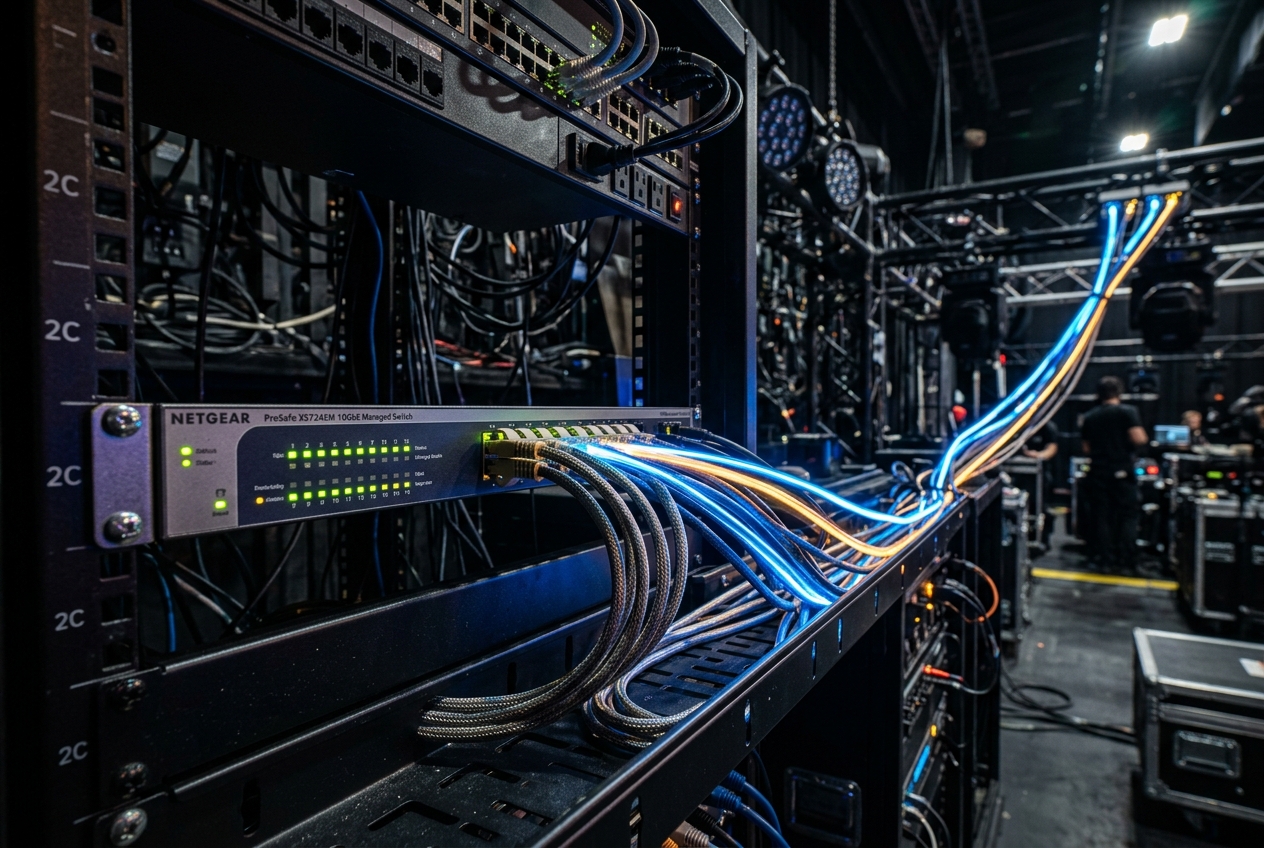
Why send DMX over a network?
A single DMX cable carries one universe (512 channels). A show with dozens of moving lights and LED pixels needs many universes. Rather than running dozens of DMX cables, you send them as data packets over one Ethernet cable to network nodes, which convert each universe back to physical DMX outputs at the rig. This is cheaper, lighter, and far easier to reconfigure than copper everywhere.
Art-Net at a glance
- Created by Artistic Licence; now on Art-Net 4.
- Traditionally uses broadcast (though Art-Net 4 supports unicast), on the 2.x.x.x or 10.x.x.x IP range by convention.
- Enormous device support — almost every node, media server and software supports it.
- Simple to configure, which makes it a safe default for small and medium rigs.
- Older broadcast setups can flood cheap switches with traffic for every universe, whether a device wants it or not.
sACN (E1.31) at a glance
- A formal ANSI/ESTA standard (E1.31), designed specifically for entertainment.
- Uses multicast by default, so managed switches only forward each universe to devices that subscribed to it — much lighter traffic on large systems.
- Has built-in priority (0–200), so a backup console can take over cleanly if the main one drops.
- Universe numbers map directly to multicast groups (239.255.x.x), making addressing predictable.
Head-to-head
- Network load: sACN multicast wins on big rigs; Art-Net broadcast can swamp unmanaged switches.
- Redundancy: sACN's native priority makes tracking backup and dual-console failover straightforward.
- Compatibility: Art-Net is on more legacy gear; sACN dominates newer professional installs.
- Setup simplicity: roughly equal today; both are a few clicks in most software.
- Discovery: Art-Net has ArtPoll for auto-discovery of nodes; sACN relies on universe configuration.
Networking tips that prevent 90% of problems
- Put lighting on its own physical network or VLAN — never share it with show video or office Wi-Fi.
- Use a managed switch with IGMP snooping for sACN multicast, or multicast can behave like broadcast.
- Give every device a static IP; avoid DHCP on a show network.
- Use good gigabit switches and cable; lighting data is small but latency and dropouts are unforgiving.
So which should you pick?
If your nodes and fixtures support sACN and you're running many universes, use sACN for its efficiency and clean failover. If you have older gear or want the widest compatibility, Art-Net is a dependable choice. Many rigs even run both on separate ranges. DMXpressions™ outputs both, up to 128 universes, so you're never locked in.
Related: how many universes you need and what DMX-512 is.
Continue with DMXpressions™: see the related product workflow or review all platform features.